Emily Fisher
In international law, the families left behind by an enforced disappearance are themselves recognised as victims, having undoubtedly suffered tremendous harm. Indeed, the crime is widely understood to impact entire communities and societies, even serving as a tool to terrorise a whole electorate.
My PhD aims to shed further light on the experiences of women who search, who form organisations and work together to locate, not only their family members, but the relatives of those around them. Specifically, I will delve deeper, through a number of inquiries, on the relationships between these grass-roots search organisations and the international institutions formed to help them.
The literature tells us that those left behind often form groups, or collectives, to assist them in the search. This can be for a number of reasons such as:
- Protection – whereby searching itself is dangerous and women become particularly vulnerable;
- Vocalisation – whereby there were no other channels through which to express dissatisfaction with State responses;
- Identity – whereby a collective identity of the relatives of the disappeared forms, or, identity transformation – from motherhood to activism;
- Solidarity – whereby relatives can share with others who have gone through a similar experience;
- Resource-sharing – whereby one may wish to search for a family member but, by themselves, does not have the means to do so.
These are just a few of many examples from academic literature, reports, news articles and international documents that begin to outline some of the motivations, but of course, for many this will also be highly personal.
Organisations across the globe undertake a variety of actions in support of the families of the disappeared including some that engage, or support engagement, in the search itself, such as the Association of Relatives of Detained and Disappeared Persons in Colombia or the Committee of Relatives of Disappeared Migrants of El Progreso in Honduras, to name just two of many. However, organisations go above and beyond the search, engaging in different practices to further support family members such as; legal representation, justice initiatives, education and memorialisation. Many organisations undertake a variety of protests, some that have taken place over years, and through generations.
These organisations are characterised through different theoretical lenses in the academic literature whether that be as individual victims organisation or as grief activists or as social movement/network actors, or as I am currently theorising in an upcoming paper, through the lens of the cause field. Many organisations and the individuals themselves actually identify with the model of family, creating deep bonds, sharing memories and supporting each other through past and ongoing hardships – there is an ethic of care and love that is central to the movement. However you position these organisations, it is clear they are doing vital work as hundreds of thousands of individuals remain disappeared globally and with each of those leaving behind family members and affected communities, the number of Victims that need supporting in some manner or another is colossal. Despite this, ultimately, they should not be doing this work, primarily as disappearance constitutes an international crime, but, when they do occur the State themselves is under international obligation to search for the missing and reinstate the family. In shining a light on organisations, and centring family participation, States are evading responsibility that, rightfully, belongs only to them. Research organisations such as FOUND, who recently located two bodies in Jalisco using machine learning, are aiming to bridge this gap and develop these technologies for improved searches. However, this also does not shift responsibility from the State.
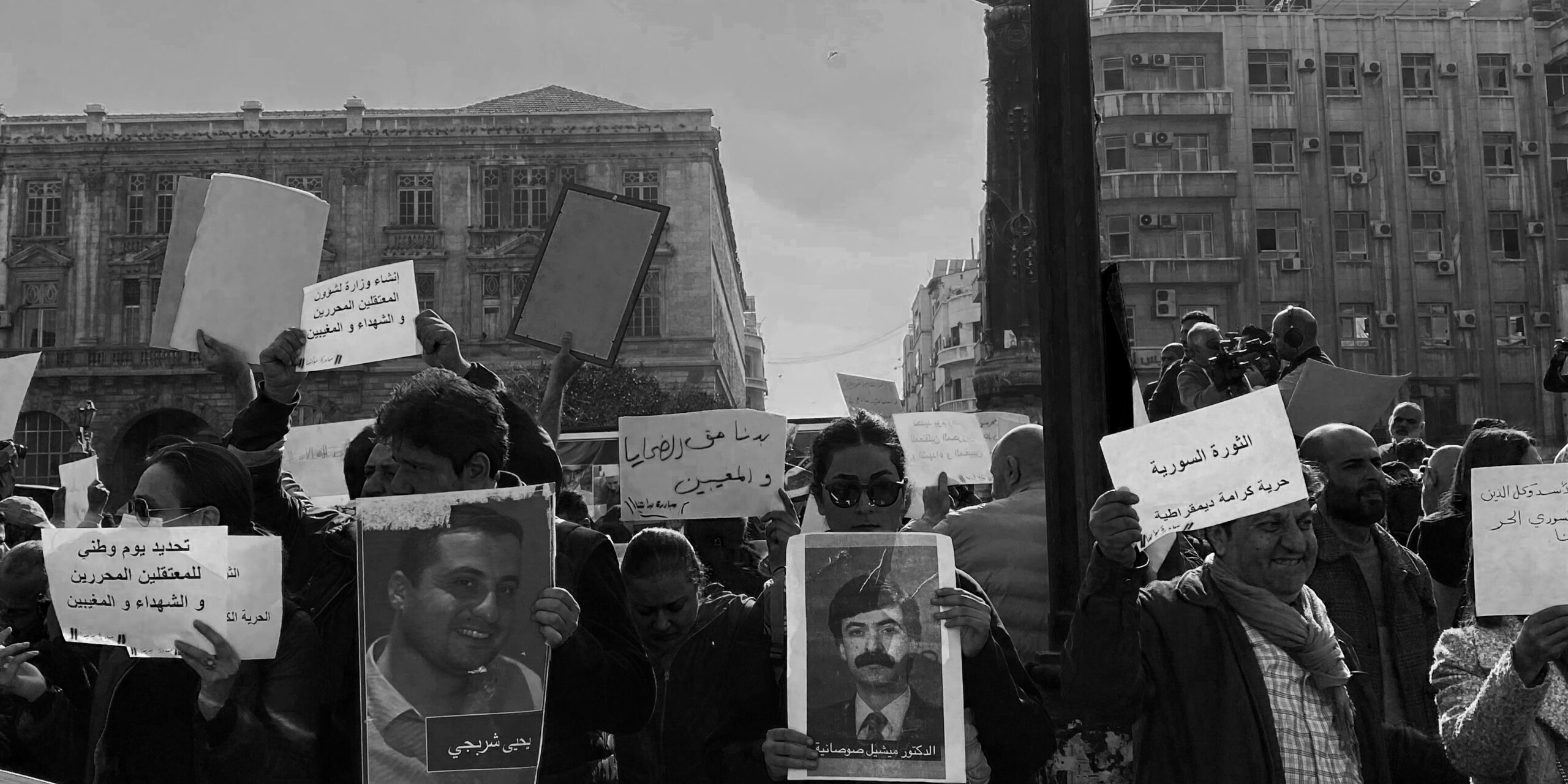
Researchers have attempted to theorise the suffering of families left without knowledge of their loved one’s fate, the most prominent in relation to enforced disappearance is that of ambiguous loss. This suggests that a loss without any resolution is experienced in a particularly traumatic way, that disappearance creates a void that family members and communities must bear as they grapple with an altered identity absent of their missing loved one. This concept has been extended to suggest that in societies where many people have been forcibly disappeared there may be a cumulative impact that political actors can weaponise as a mechanism of power and social control. This ties in with a concept that Ellen and I have been working on, drawing on data from MaGPIE’s mass grave database and horizon scanning: the notion of the second disappearance. Attested to in literature (or here or here) but not actively defined, the second disappearance takes place when States fail to search or identify the disappeared, or fail to produce an environment or framework where safe and ethical excavation and identification can take place, they effectively enact a second disappearance: the erasure of families’ grief, funerary traditions and social inclusion alongside the disappearance of identity for the dead. Das (2000) concept of poisonous knowledge provides theoretical clarity to the experiences of those living with ambiguous loss, and a quote from Daşlı demonstrates this nicely whereby families are “Keeping the door open in case the father comes home”, but Das’ concept can also be seen where families around the world use the symbolic holding of the photograph to depict, and protest for, their missing loved one, in this sense, they are showing rather than telling us of the violence.
This year marks twenty years on from the entry into force of the International Convention for the Protection of All Persons from Enforced Disappearance, first demanded by Latin American relatives’ organisations, and we’re reminded that their work continues to guide how the world understands disappearance and its enduring impact. Yet many States have still not ratified the Convention, and many thousands of people remain to be found, underscoring how far States still are from meeting the obligations families fought so hard to establish.