Shahid Abraham
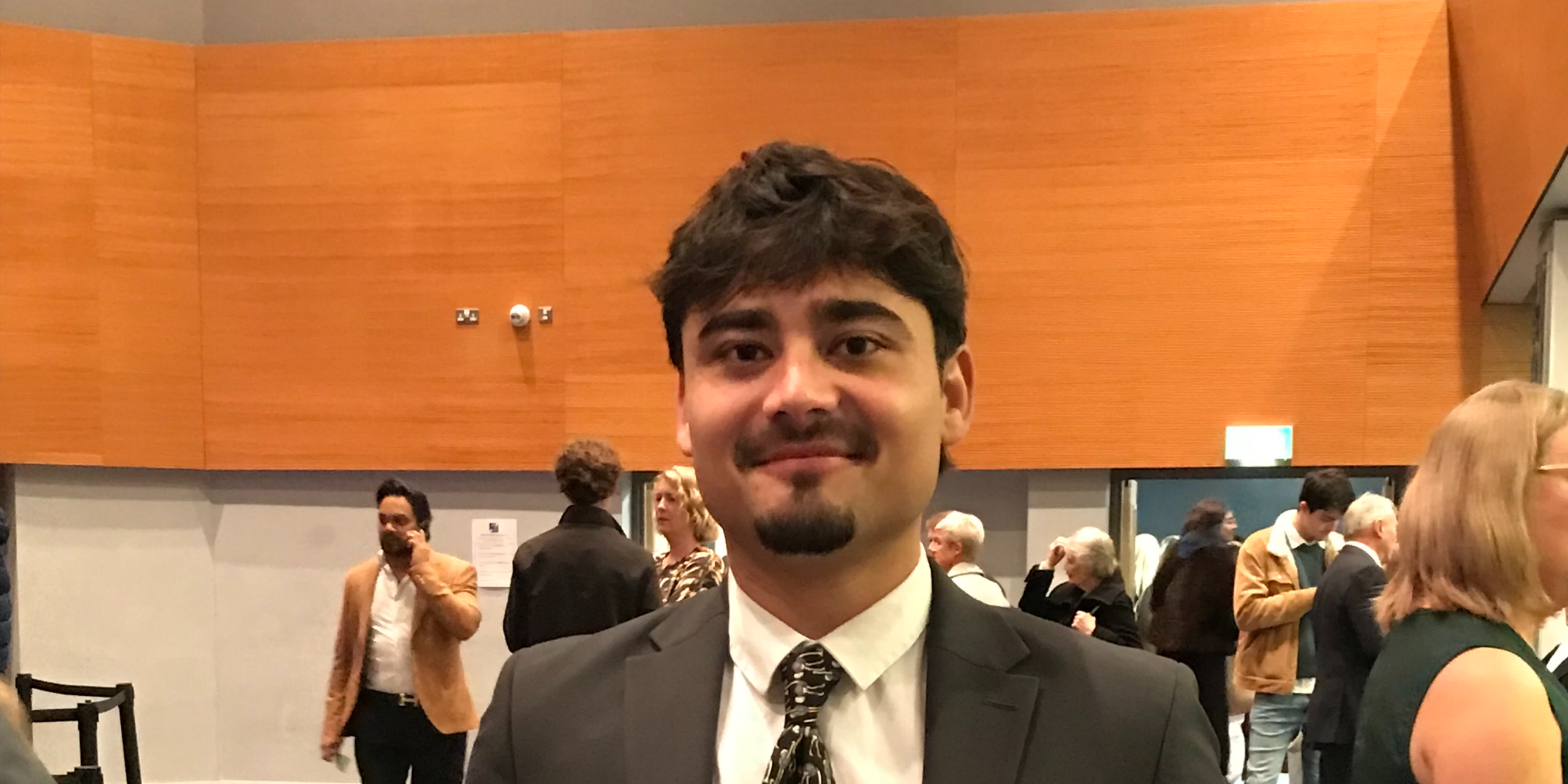
My name is Shahid and I am very proud to announce myself as the newest member of the MaGPIE team. This post is an opportunity to share a little about my background, my journey into research, and the work I will be undertaking with MaGPIE, focusing on the participatory rights of families in mass grave investigations.
Victims of mass graves are not only the dead, but also the family and friends left behind. States have obligations to search for the missing and investigate mass graves, while families of the missing have the right to participate in these processes. But participation is not just a right; it can also be a powerful social tool and should be a fundamental consideration when addressing human rights violations. My interest in participation has developed through seeing what happens when communities and individuals are given a meaningful opportunity to represent themselves.
During my bachelor’s degree in Archaeology and Anthropology, I developed an interest in cultural heritage, connecting to its importance for representation, identity and empowerment. I began asking questions about its practical applications and potential to contribute to broader social change and was eager to see these ideas put into practice.
My first real insight came through working with an organisation called Oral History Kosovo, where I learned the importance of civil society in creating more inclusive and balanced representations of heritage. Their mission is to record life-story interviews that connect individual experiences with the broader history of Kosovo, creating an alternative and layered record beyond simplified national narratives. They provide a platform where different voices are valued and heard equally. I had the privilege of witnessing how meaningful it is for people to feel genuinely listened to and to have a say in how their experiences and stories are communicated.
This experience inspired my undergraduate dissertation, titled Oral History as Participatory Cultural Heritage in Post-War Kosovo. Recognising that when states fail to meaningfully engage with communities, the use of cultural heritage as a tool for representation can become divisive, I became interested in oral history as an alternative to more traditional symbolic forms. In Kosovo, top-down approaches led by state and international actors sometimes reinforced existing tensions between communities with deep-rooted grievances. I came to see participation and the co-creation of cultural heritage, through media such as oral history, as important ways of achieving more meaningful representation and contributing to positive social change, particularly in politically and culturally contested contexts.
My interest in cultural heritage continued to develop when I worked in Romania with an international NGO called Grampus Heritage. I took part in a project in the remote villages of Râmeț, in the Trascău mountains of Transylvania, where our team helped to restore an abandoned farmstead using traditional building techniques and transform it into a ‘living’ museum for visitors to experience and learn about the culture. The small, isolated villages had traditionally been self-sustaining communities, relying on local knowledge and traditional farming, building, and cooking techniques. However, modernisation and globalisation have contributed to significant demographic changes, with many younger residents leaving within a generation and older generations increasingly left to sustain these communities. This experience gave me a greater understanding of the pressures facing marginalised communities and the challenges of preserving cultural practices in a rapidly changing world.
I also have experience in commercial archaeology, where I was able to put my practical skills of surveying, excavating, and recording to use on a Neolithic flint mine. Although this was very different to forensic mass grave investigations, I developed an appreciation for the responsibilities involved in archaeological site work, including the careful handling and documentation of sensitive material. Beyond the practical skills, the experience gave me a deeper respect for the lives and experiences of people who came before us.
When working as a cultural heritage volunteer for the ‘Green Village’ partnership in Pano Lefkara, Cyprus, I engaged with several organisations supporting community-led projects focused on rural decline. One particularly relevant project involved working in partnership with the local council to maintain a Muslim cemetery that had been vandalised in the 1980s. It was a powerful reminder of how cultural and religious heritage can remain significant within communities long after conflict and division.
With that being said, I am delighted to bring my skills and knowledge to MaGPIE and join its fantastic interdisciplinary team. This research provides an opportunity to combine my anthropological background with the practicalities of international law and contribute to a project with the potential to make a tangible difference.
Researching mass graves has given me a new perspective on the lasting effects of violence and the continued suffering experienced by those left behind. The actions of states and institutions should not stand in the way of truth and justice and families affected by mass graves must be able to understand, exercise and demand their rights.
My research will take a family- and victim-centred approach to exploring what meaningful participation actually looks like for families within mass grave investigations. I am particularly interested in understanding how families experience participation, what makes it meaningful, and how their voices and perspectives can be better recognised throughout these processes. I hope that this research can contribute to a better understanding of participation, ensuring that families are not simply recognised as victims of past violence, but as people with an active voice in the processes that follow.