Jorge Eduardo Jasso Cuéllar
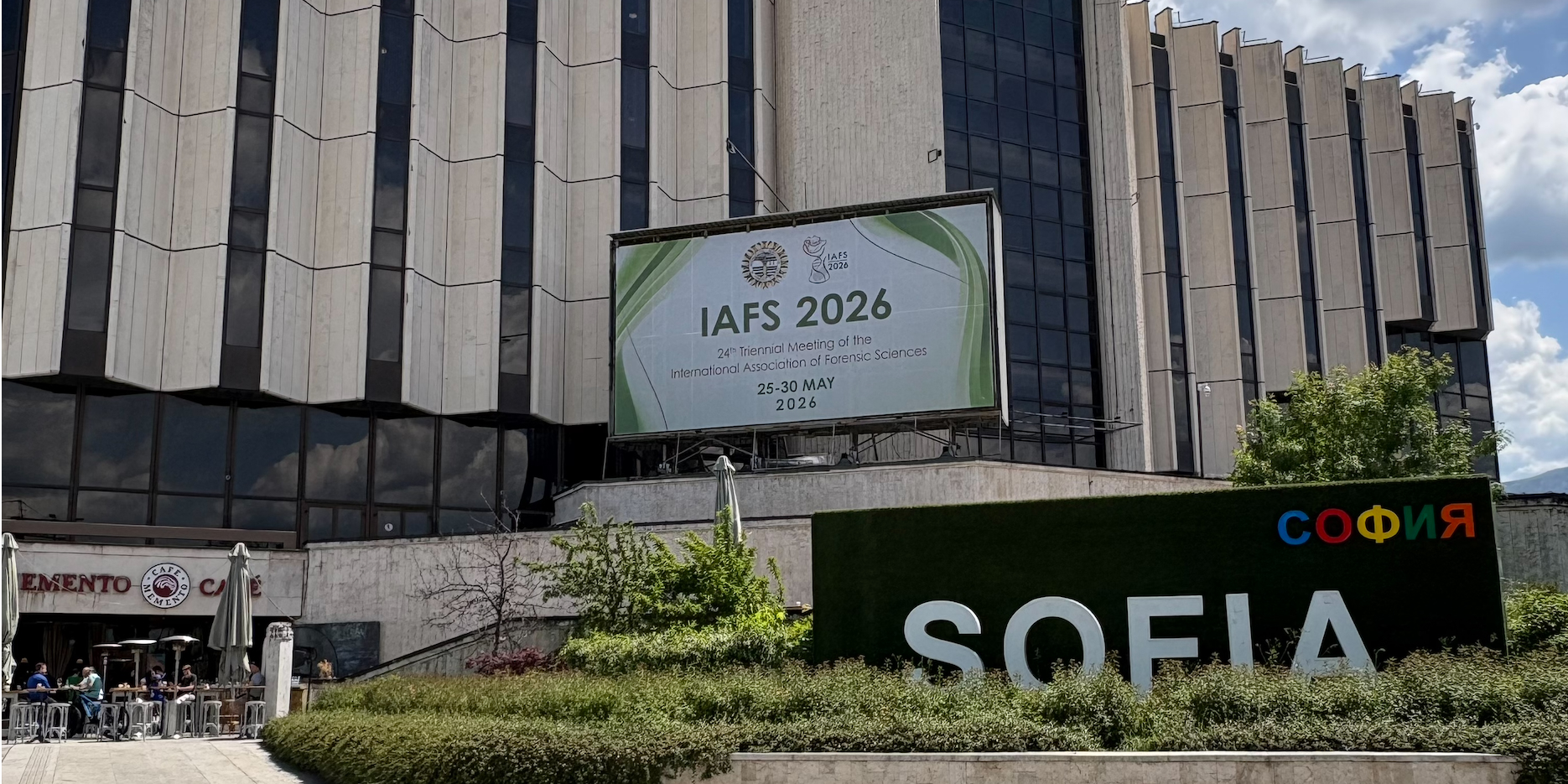
The 24th Triennial Meeting of the International Association of Forensic Sciences (IAFS 2026), held in Sofia, Bulgaria, brought together forensic professionals, academics, law enforcement representatives, and students from all over the world. For one week, the forensic science community had the opportunity to share research, discuss current challenges, explore new technologies, and reflect on the field’s future.
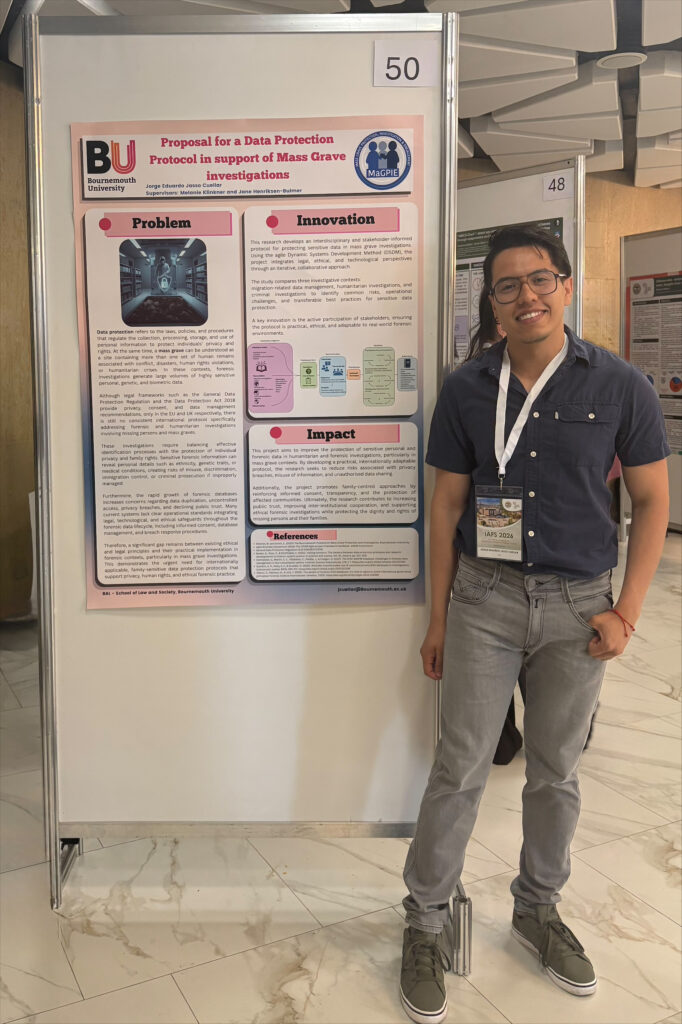
As a student attending the conference and presenting a poster, I had the chance to experience first-hand the scale and diversity of this international event. However, what stood out the most was not a particular presentation or speaker, but the broader conversations taking place throughout the week. The conference offered a unique snapshot of where forensic science stands today and where it may be heading in the future.
I had the opportunity to attend for the first time and confirmed that one of the defining characteristics of IAFS 2026 is its international nature. Participants came from a wide range of countries, bringing different legal systems, scientific approaches, and professional experiences. Despite these differences, many discussions revealed common challenges faced by forensic practitioners worldwide.
The conference programme reflected the diversity of forensic science itself. Multiple lectures, workshops, and panel discussions took place simultaneously throughout the week, covering topics that ranged from highly technical and statistical aspects of forensic science to humanitarian and social issues. This allowed participants to focus on the areas that best matched their interests and professional goals. In my opinion, this variety was one of the event’s greatest strengths, as it highlighted how broad and multidisciplinary forensic science has become.
Among the topics that appeared most frequently were artificial intelligence, DNA analysis, human identification, and emerging technologies in forensic investigations. Although these themes were discussed repeatedly, each speaker approached them from a different perspective, often based on the realities and challenges of their own country or area of expertise. This made it clear that forensic science is becoming increasingly interconnected, with countries learning from each other’s successes, experiences, and challenges.
One example was the growing interest in artificial intelligence. Across disciplines, researchers presented new ways AI could support forensic investigations. Applications included image enhancement, facial comparison, digital evidence analysis, and data management. Some presentations showed how machine learning tools can process large amounts of information much faster than traditional methods.
At the same time, many speakers highlighted the need for caution with AI. Questions related to transparency, validation, explainability, data protection, and bias were present in many discussions. The general message was not that AI will replace forensic experts, but that it can become a valuable tool when used responsibly and supported by solid scientific validation. New technologies may offer significant benefits, but they still require rigorous testing before being implemented in casework.
While these discussions were taking place in one room, researchers in another were presenting advances in DNA sequencing technologies, interpretation methods, and approaches for dealing with complex DNA mixtures. Similarly, debates over population databases and likelihood ratios highlighted the importance of statistical interpretation in modern forensic science. Several presentations reinforced the idea that choosing the appropriate population framework is essential to producing meaningful, scientifically reliable conclusions.
Another recurring theme throughout IAFS 2026 was the need for forensic laboratories and investigators to adapt quickly to technological change. The enormous volume of digital information available in modern investigations presents both opportunities and challenges. New applications, communication platforms, and digital devices appear constantly, requiring continuous training and methodological updates. Many experts emphasised that digital evidence is no longer a specialised area affecting only a limited number of cases. Instead, it has become a routine part of investigations across many different types of crime.
Furthermore, there was a discussion of technology in human identification, which remains one of the most important responsibilities in forensic science, particularly in cases involving disasters, armed conflicts, migration, or unidentified remains. Sessions focused on forensic anthropology highlighted advances in imaging techniques, skeletal analysis, and identification methods. Researchers discussed how new technologies are helping improve accuracy while reducing examination times. Several speakers also stressed the importance of multidisciplinary collaboration. Successful identification efforts often depend on expertise from anthropology, pathology, genetics, odontology, and other forensic disciplines working together.
The humanitarian side of forensic science was also strongly represented throughout the conference. Discussions about missing persons demonstrated that forensic work extends far beyond criminal investigations. Behind every unidentified individual or unresolved disappearance is a family searching for answers, making this area of forensic science both scientifically challenging and deeply human. Speakers highlighted the importance of continuing to develop protocols and guidelines that place families at the centre of the response process, recognising that communication, transparency, and long-term support are essential components of effective humanitarian forensic practice.
Another important point raised during the conference was that modern forensic investigations increasingly require contributions from multiple specialities. Cases may simultaneously involve biological evidence, digital data, toxicological findings, trace materials, and medical examinations. As a result, communication and collaboration between disciplines have become more important than ever. This collaborative mindset was reflected not only in the scientific programme but also in the conference atmosphere. Researchers, practitioners, students, and policymakers were all part of the same conversation about the future of forensic science.
On another floor, poster sessions showcased research from emerging scientists, providing opportunities to share findings, receive feedback, and engage with experienced professionals. Topics ranged from laboratory methods and technological innovation to legal issues and forensic education. For many students, including me, presenting our research at an international conference is an important opportunity to advance our professional development.
IAFS 2026 provided an excellent overview of the current state of forensic science. Informal conversations during coffee breaks, networking events, and poster sessions often led to discussions that went beyond specific research projects. Participants exchanged experiences about education, laboratory practices, professional challenges, and future collaborations. These interactions showed that forensic science is evolving rapidly and that many of the challenges faced by the field are shared across countries and institutions.
Perhaps the most important lesson I took away from IAFS 2026 was that the future of forensic science will depend not only on technological innovation but also on collaboration. The challenges facing the discipline are becoming increasingly complex, and addressing them will require cooperation between researchers, practitioners, institutions, and countries.
Overall, IAFS 2026 was a valuable reminder that forensic science is much more than laboratory techniques and courtroom testimony. Conferences like this demonstrate the importance of international collaboration and the exchange of ideas. While scientific publications remain essential, face-to-face discussions often provide a deeper understanding of how research is applied in real-world situations. For me, attending IAFS 2026 was both an educational and an inspiring experience, offering a fascinating glimpse into the future of forensic science.