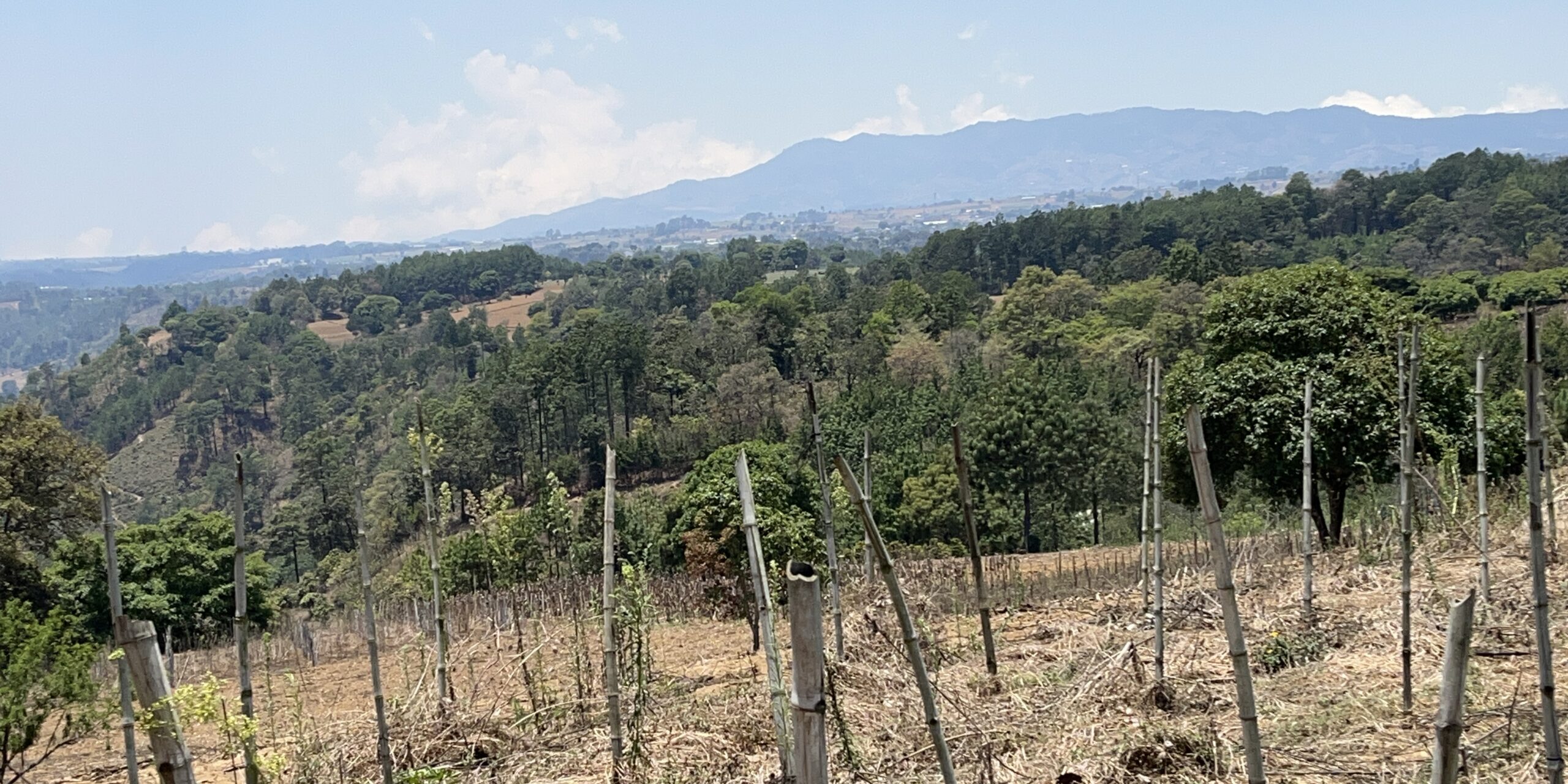
Image: Outside Comalapa Memorial Site, Guatemala
Melanie Klinkner and Howard Davis
“The truth is an empowering and healing force. We embrace it for the past, the present and the future.”
(UN Secretary-General António Guterres)
When mass atrocities and human rights violations are committed, knowing the truth about what happened matters. It matters to the victims, their relatives, families and communities. 2026 has added to the number of ongoing conflicts raging around the world today. Civilians often pay the price when legal norms are being disregarded. When the fog of war lifts or gross human rights violations become apparent, victims of atrocity crimes have the right to know who and what caused their suffering, and what happened to family members who went missing. Societies should also have the right to know and understand what happened to them as a whole.
March 24 marks the International Day for the Right to the Truth Concerning Gross Human Rights Violations and for the Dignity of Victims. As we have written elsewhere, the date commemorates the 1980 assassination of Óscar Romero, human rights advocate and archbishop of San Salvador. He campaigned for justice and peace for his fellow citizens against a repressive regime and during a brutal conflict; he was assassinated by a paramilitary unit.
When confronted with a history of human rights violations, states are obliged to undertake, on their own initiative, effective, independent investigation to provide victims, their next of kin and the public with a full and detailed understanding of what happened, why it happened, and who was responsible, both directly and indirectly. The purpose is not only to satisfy the need to know, but also to provide the basis on which victims and others can obtain whatever reparation the law permits for these violations of fundamental rights.
The right to the truth also forms a central and necessary element in efforts to combat impunity for human rights violations. On the basis of a proper understanding of the facts, victims, prosecutors and others can then pursue the right to justice against perpetrators as well as the right to reparation, and guarantees of non-repetition.
Mechanisms that can help achieve the right to the truth are truth commissions, official inquiries and courts of law. But they have their detractors and often face serious obstacles begging an important question: Where are we now in relation to the right to the truth?
Over the past years we have been following developments. This is what we observed:
- Neither solely a precursor, nor a derivative
Fundamentally, the right to the truth is a right of victims and their relatives to a narrative and explanation of what happened and who is responsible; this narrative and explanation needs to be authoritative; there needs to be some involvement of victims in the processes of arriving at this narrative. Arguments for an independent right to the truth are both intelligible and visceral. Ascertaining the truth surely is a ‘good’ in and of itself, worthy of protection and pursuit.
When seeking to fully grapple with the right, particularly before the regional human rights courts, tensions become apparent as to whether the right to the truth is a derivative and subsumed under the duty to an effective investigation or merely a precursor for possible, future accountability.
The right has stand-alone merit as a good and encapsulates the need for the establishment and acknowledgment of facts thus explicitly safeguarding essential needs of survivors as individuals and collectively. This leads neatly to our next observation:
- Individuals, families and society
The right to the truth has an important public or social aspect in the sense that its satisfaction requires an independent state duty to effectively investigate and report atrocity and disappearance which applies independently of victims’ wishes and which provides space for public discourse (e.g. NGO intervention). We also know that such an effective investigation and report must refer not only to the details relating to the individual’s experience but also to the political and social context and to the chain of command. They must meet criteria of authority and impartiality (which may not be the same thing as being convincing from a victim’s perspective).
- Beyond enforced disappearances
There are signs that the scope of the right to the truth is expanding. Originally, the codification of the right to know the truth evolved from international humanitarian law through the work of intergovernmental bodies responding to the problem of enforced disappearances and the need of the families of the missing to know the fate or whereabouts of relatives or loved ones. Consequently, the right to the truth relating to enforced disappearances had been codified and is recognised by regional and international bodies including in 2022 by the African Commission on Human And Peoples’ Rights. But it has also expanded into other areas of gross human rights violations including torture, extrajudicial killings and violence against women in armed conflict. And it has been expressly used before the Inter-Armerican Court of Human Rights in the context of freedom of expression which includes the right to seek and receive information.
- Preserving records and facts
Finally, the right to the truth relies on investigating, documenting and reporting; this resonates with the global mapping work of MaGPIE. Documenting patterns of violence can serve as a record of human rights abuses. Indeed, it has been said that today’s documentation will serve tomorrow’s truth and justice seeking efforts.