Diego R. Nunez
Mass graves contain evidence that is essential for the realisation of truth, justice and reparation. In this sense, their protection plays a fundamental part in State’s compliance with their human rights obligations. This position is further reinforced in the international legal landscape. The Inter-American Court of Human Rights (IACtHR), for instance, has repeatedly underscored the State’s obligation to obtain information on burial sites and to adopt the measures necessary for their investigation and protection; similarly, the Working Group on Enforced or Involuntary Disappearances (WGEID) has remarked the same obligations, putting particular emphasis on the need to systematically map these sites. Yet, the MaGPIE team has observed that despite the broad agreement on the importance of documenting these burial sites, efforts in this area are uneven even in places where mass graves are widespread.
Many Latin American countries have suffered periods of war or state violence where the criminal practice of enforced disappearance was widely employed. Most countries continue to carry the legacy of their desaparecidos and, tragically, clandestine graves have become an unavoidable concern for many citizens. The discovery, location and documentation of clandestine graves reveal patterns of ambiguous governance across Latin America, consequence of the structures of government and power relationships that persist after the return to democracy in each country. In this post, we will briefly focus on the status of mass graves investigations in Argentina, Chile and Perú, offering an overview of the findings and a map of known mass graves.
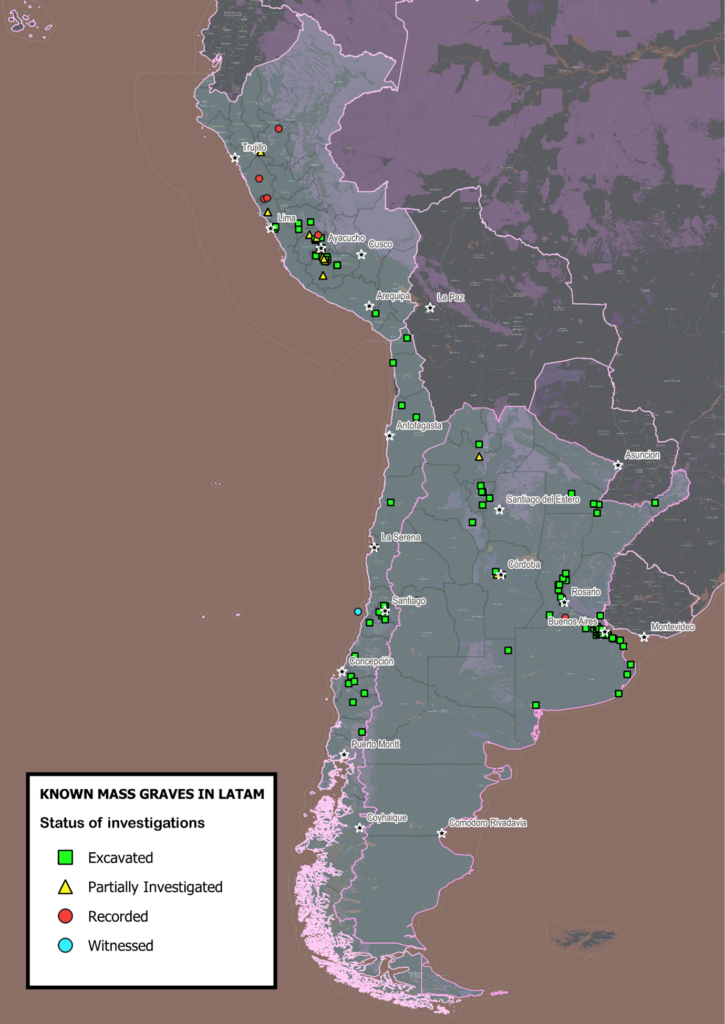 Fig. 1: Map of documented mass graves in Argentina, Chile and Perú. Data collected by MaGPIE up to December 2025.
ARGENTINA
After the coup in March 1976, the civic-military regime in Argentina began a highly coordinated plan of political repression that implied kidnapping, torturing and often murdering people identified as enemies of the regimes. When the dictatorship ended in 1983 the country adopted several different measures to deal with their legacy of past violence.
Argentina was the first country to perform exhumation as part of the process of searching victims of enforced disappearance. Since 1984, this task has been led by the Equipo Argentino de Antropología Forense (EAAF). According to official data, the EAAF has conducted excavations in most Argentinian provinces, Uruguay and Paraguay, finding victims’ remains in at least 91 locations that include public cemeteries, clandestine detention centres and remote or protected locations. MaGPIE was able to document at least 68 mass grave sites in Argentina, more than 70% located in cemeteries:
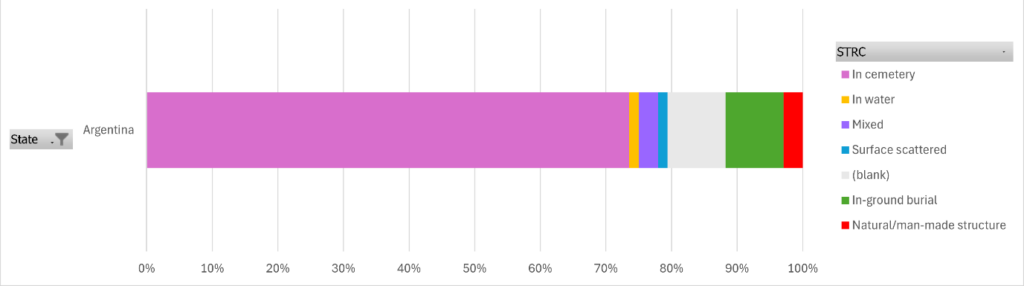
Fig. 2: Data concerning mass graves’ physical structure in Argentina.
It is possible to distinguish between at least three main modalities of disposal:
- Burials in public cemeteries: the most common method which juxtaposed clandestine and legal forms of repression. The bodies of the victims were abandoned in public places and reported to the police. After being collected, they underwent all the standard forensic examination procedures but were buried as NNs. This procedure was also employed in Brazil, Chile and Uruguay.
- Death flights: Prisoners in clandestine detention centres (CDC) were sedated, carried into aircrafts and dropped in the ocean. Only a fraction of the total victims of death flights washed ashore and could be retrieved.
- Clandestine burials: In many CDCs the bodies of the victims were buried in military premises or remote locations. Perpetrators often destroyed the bodies burning them or sealing them with concrete in barrels.
Due to the methods employed it is safe to state that the total number of victims of the regime can’t be determined beyond reasonable doubt. But while death flights and clandestine burials have proven to be an excellent method to conceal evidence, the findings made so fare in public cemeteries are a clear example of the importance of following ‘paper trails’. From the very beginning, the EAAF worked with documentation produced by state bureaucracies such as death certificates, autopsies, fingerprints, criminal records, court cases and intelligence files, among other records; in parallel, the collaborations and interviews with survivors and relatives of the desparecidos facilitated more comprehensive reconstructions of the events that permitted the identification of sites of interest for forensic investigations.
Despite certain setbacks in matters of transitional justice over the last couple of years, Argentina represents a highly successful model of investigation into enforced disappearance. Their sustained forensic and documentary effort not only contributed to the recovery and identification of victims but also played a crucial role in judicial accountability and historical clarification. The evidence produced by forensic investigations was later incorporated into national and international trials, including the prosecutions of former members of the armed forces and security agencies for crimes against humanity -the ESMA trial, the Condor Trials in Latin America and abroad, the El Mozote trial, among others. Moreover, the Argentine experience helped consolidate forensic anthropology as a central tool in human rights investigations worldwide, setting methodological standards that have since been replicated in other post-authoritarian and post-conflict contexts.
CHILE
According to the Ministry of Justice, the number of victims of enforced disappearances in Chile is 1469, of which only 307 have been found. The numbers correspond in its majority to people disappeared during the military regime (1973-1990). The existence of different typologies of crimes associated to the graves implies different approaches from an investigative perspective. It is harder to find information concerning undiscriminated violence, as little to no registers exist about the victims, their detention or execution beyond anecdotes; targeted and coordinated crimes though are more likely to leave paper traces behind which might constitute a primary source of material for the investigation.
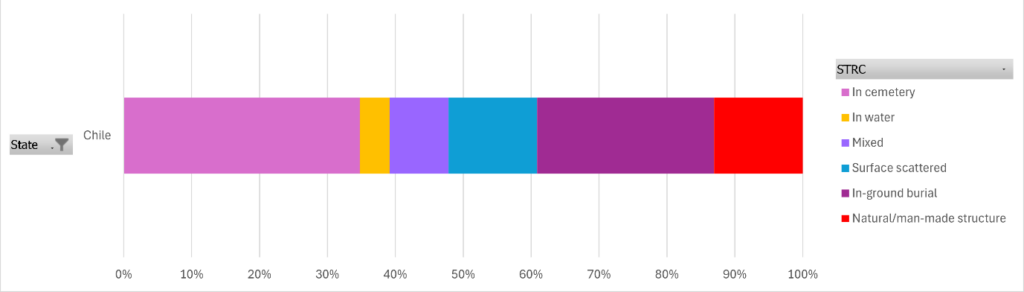
Fig. 3: Data concerning mass graves’ physical structure in Chile.
Enforced disappearance wasn’t employed homogeneously over the territory, and while data collected by MaGPIE and other sources proves that there is a concentration of crimes in urban areas, particularly in Santiago, there is an important number of cases which have taken place in more rural, mining or industrial areas. Multiple modalities of body disposal were employed to conceal summary executions: in the early period, victims were frequently buried as NN in public cemeteries (such as Cauquenes, Talca, Playa Ancha) or left unburied following raids or curfew violations; numerous burial sites were located in military premises (Fuerte Arteaga, Peldehue) or remote locations (Baños de Chihuío, Lonquén); as repression became more targeted, bodies were often destroyed or thrown into the sea or rivers from helicopters. There are also documented cases where bodies were illegally exhumed and relocated, but none is comparable with the scale of the Operación Retiro de Televisores, a large-scale campaign of removal and destruction of bodies which has seriously undermined the possibility of finding all the missing persons.
Despite the magnitude of the crime and the obligations of the State under international law, there was no clear state policy of search of victims of enforced disappearance until 2023, when the Plan Nacional de Búsqueda (National Search Plan or PNB) began its operations. While marked by strong symbolical and political actions which framed the search for missing persons as a state policy, the operational impact was minimal in the first year and mass graves investigations remained largely reactive or dependant on judicial orders. In 2024, the implementation of the plan exposed significant constrains: although dozens of sites were identified, judicial authorization requirements kept limiting proactive searches. By 2025, the PNB has gained political and international recognition and consolidated as a transitional justice instrument but reports still highlight the absence of proactive search initiatives, excessive administrative discretion, and the lack of qualitative breakthroughs in mass-grave investigations.
PERÚ
The Peruvian Truth and Reconciliation Commission (TRC) established that approximately 69000 people, both civilians and combatants, died in twenty years of war between the Peruvian security forces and the guerrilla groups Shining Path and Túpac Amaru Revolutionary Army (MRTA). During the armed conflict, Peruvian security forces committed grave abuses including many that constitute war crimes, such as extrajudicial executions, enforced disappearances, torture, sexual violence, and other serious human rights violations. The CVR documents 73 illustrative episodes of violence, but only 20 of these cases were identified by MaGPIE agents as involving mass graves investigations. With a great effort, the MaGPIE project was able to document 42 mass grave sites in Perú which involve human rights violations committed during the 1980-2000 conflict and afterwards. The data is fragmented, incomplete, and not easily available.
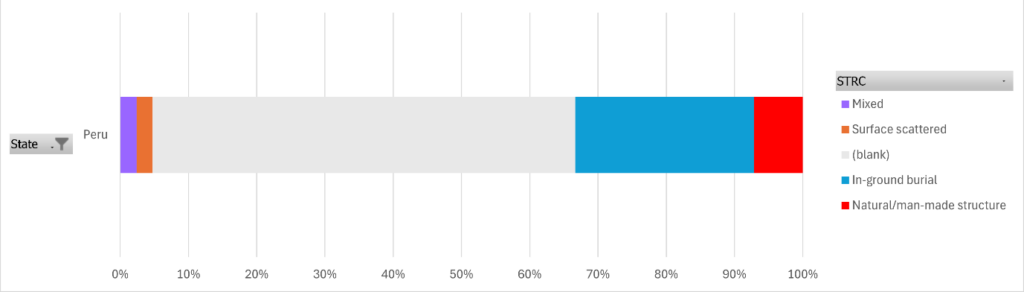
Fig. 4: Data concerning mass graves’ physical structure in Perú.
The exhumations were initiated by relatives and local communities with the support from human rights organizations, but progress has been uneven due to a variety of factors. Fear and poverty often prevent families from coming forward. The country presents important morphological variations which make the groundwork of locating and exhuming sites more difficult; the lack of forensic capacity in the earlier period of exhumations has also contributed to the lack of results. According to the TRC, over 40% of these victims were Quechua-speaking peasants from the highland department of Ayacucho, where communities maintain a strong collective identity tied to ancient traditions that do not always accept exhumations as a necessary part of the reparatory process – the series of transitional justice interventions through which the post-conflict Peruvian state seeks to address legacies of mass death.
In some cases, the traditions in place see the exhumations as a disturbance of the natural cycle of return to earth; in other cases, the poverty and lack of trust in the authorities rejects the idea of investing resources in the dead, when basic human survival needs are barely met. In some districts villagers demand the identification of their loved ones to provide a dignified burial, and while certain programs have been successful to integrate the participation of the communities in these processes, the psychosocial support has been inconsistent mainly due to lack of resources, resulting in the revictimization of the survivors and families. Even more problematic from a perspective of memorialization, it seems that the campaign of violence in Ayacucho has been unaccounted by mainstream Peruvian society, revealing the existence of a persistent logic of “absolute exclusion” towards these groups. Other reports from Amnesty International and the ICTJ support this idea by arguing that there is a clear relationship between social exclusion and the intensity of the violence. The logic of exclusion of indigenous people was transversal to the conflict; it existed before the conflict and persisted in the aftermath. In this sense, there were no attempts to deliberately erase this history, the problem is that such a degree of violence went unnoticed by the broader civil society.
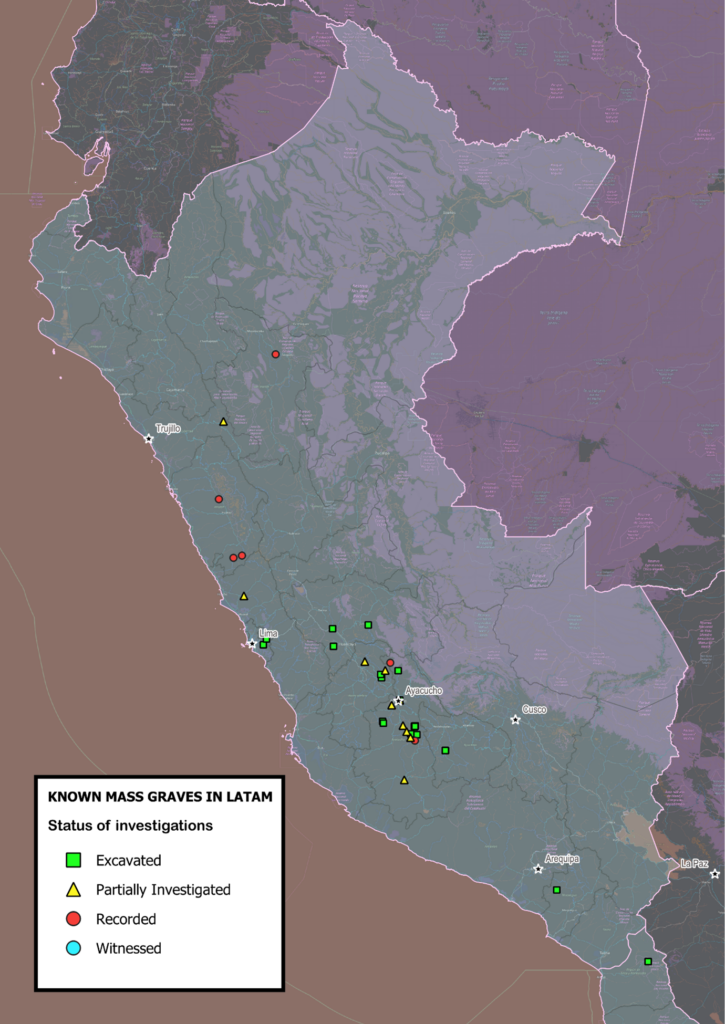
Fig. 5: Map of documented mass graves in Perú. Data collected by MaGPIE up to December 2025.
Up to 2013, DNA testing was not available in the country. Traditional methods -fingerprints, dental records, medical records, visual identification, personnel effects identification- have not produced many positive results, while fragments of human remains have been proved impossible to identify. Up to February 2026, plenty of human remains remain unidentified due to limited forensic capacity and underdeveloped DNA databanks. The legal implication of the impossibility of individualization and identification is that the human remains uncovered in the forensic exhumation could not constitute sufficient legal evidence to prove a crime within the Peruvian penal code: within the category of extrajudicial execution and aggravated murder, victims must be identified; within the category of forced disappearance, the body of the victims is, by definition, missing. Therefore, these human remains entered a legal limbo, where they only constitute contextual evidence for the prosecution.
According to Rojas-Pérez (2013), in Los Cabitos trial -a clandestine detention centre where at least 136 citizens where victim of human rights violation-, the indictment was primarily based on the testimony of survivors and relatives of the disappeared, while the evidence collected in the forensic exhumation works is treated as ‘‘contextual evidence” only. In La Cantuta (2008) case, where the sentence claims that unidentified human remains “will be insufficient if it is not accompanied by reliable information, which can only be a scientific examination” to prove the crime of enforced disappearance. On this matter, a report from the OHCHR (2019) claims the Inter-American Court held that the additional requirement in Peru’s codified crime of enforced disappearance that the enforced disappearance be “duly proven” was a violation of the Inter-American Convention because it prevented the State from fully complying with its international obligations. This requirement was complicated by the ambiguous construction of this added phrase, as it was “not possible to know whether such ‘due proof’ must precede the criminal report or complaint and, secondly, it is not clear therein who should produce such proof either.”
What makes the Argentinian experience so different from Chile and Perú? Despite periods of regression -especially pronounced from 2023 onwards, Argentina maintained a broad consensus that enforced disappearance constituted a crime against humanity and that investigating it was a state obligation. This continuity allowed investigations to persist across changing governments and legal frameworks. The case of Chile and Perú are different. While the Junta in Argentina completely lost their legitimacy after the Guerra de la Malvinas (Falklands War), the regimes of Chile and Perú continued to retain power after the transition, which allowed them to mitigate investigations into human rights violations with the return to democracy. Indeed, neither the Argentinian, Chilean or Peruvian truth commissions had strong coercive powers, their influence depended more on the political context than legal authority, and Argentina stands out because the political moment allowed its findings to immediately feed into criminal prosecution.
Argentina’s success relied heavily on dense state bureaucratic records that unintentionally documented crimes. In contrast, the Chilean dictatorship was careful in destroying and withholding records, leaving fewer administrative traces in cemeteries and civil registries. In Perú the use of archives and documentary evidence was key to reconstruct the national memory. Documentary information was sought and amassed in both public and private institutions to then be used in different investigations, but the violence occurred largely in rural and conflict zones where deaths were rarely formally registered at all, especially among indigenous populations. Cemetery records, death certificates and autopsy files often simply do not exist. The structural absence of documentation severely limits the ability to locate graves through archival cross-checking. In both Chile and Perú, the absence of early, independent forensic institutions such as the EAAF have limited the consistency in the investigations and the development of a highly specialized institutional and professional capacity.
Finally, Argentina’s success also depends on a sustained strong collaboration with victims’ relatives and the civil society. This sustained dialogue helped guide forensic searches, contextualize findings, and legitimize investigations both socially and politically. Instead, the engagement with civil society in Chile and Perú has been less systematic. In Chile the climate of fear and the legal protection initially granted to perpetrators reduced the participation of victims and survivors during the early critical years; a series of misidentification at the Patio 29 site also eroded the trust of survivors and relatives in the Servicio Médico Legal. In Perú, the mistrust toward state institutions from indigenous communities combined with geographic isolation, linguistic barriers and lack of funds have severely undermined the instances of cooperation, but humanitarian efforts persist. Without strong, institutionalized mechanisms to integrate family, survivor and local knowledge, many burial sites will remain unidentified or only partially investigated.